
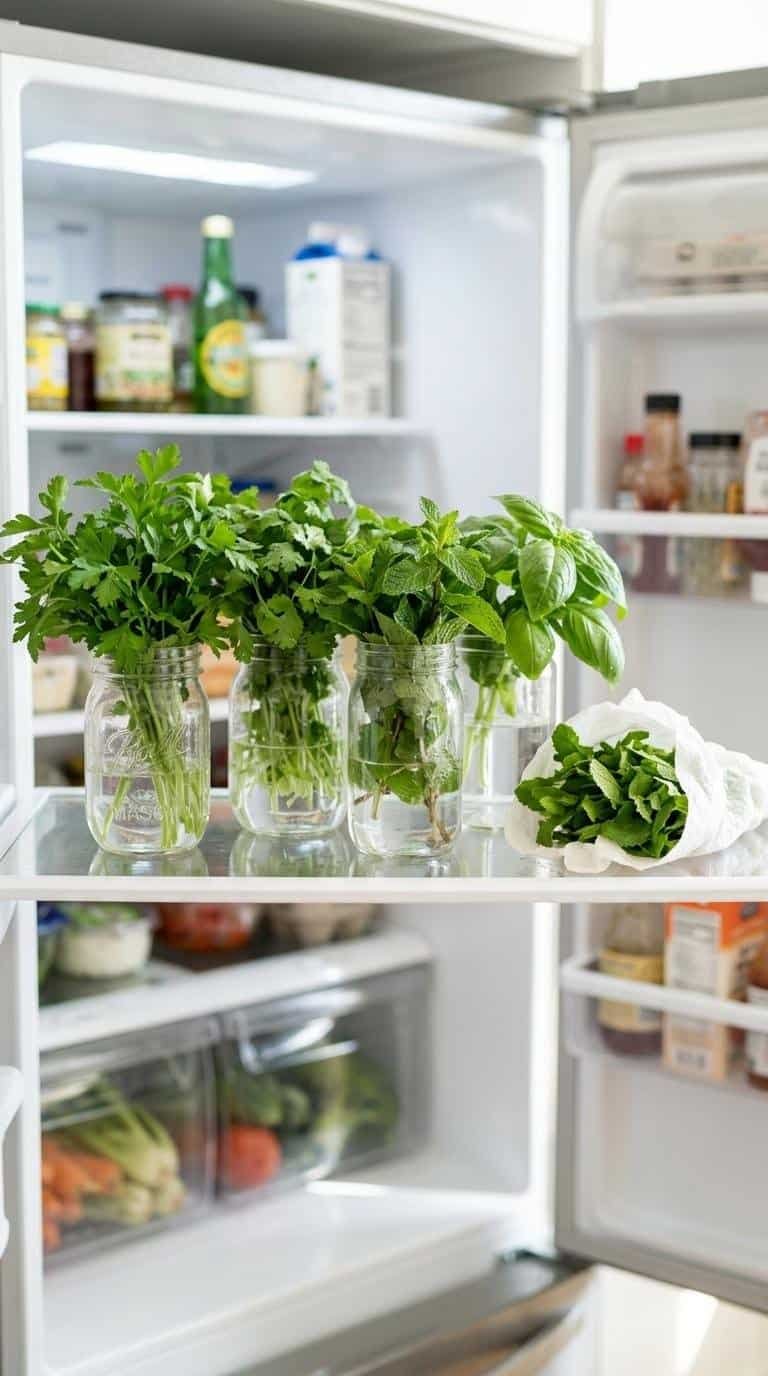
How to Store Fresh Herbs So They Last Longer
Fresh herbs can turn a simple dish into something special, but they also spoil quickly. If your parsley goes slimy, your cilantro turns yellow, or your basil turns black within two days, the problem is usually storage — not the herb.
Fortunately, there’s a simple way to store fresh herbs so they last longer. Moreover, the right method depends on how each herb behaves. So let’s look at each type.
First: Herbs Are Not All the Same
First of all, soft herbs like basil, mint, parsley, and cilantro like moisture but hate being crushed. On the other hand, hardy herbs like rosemary, thyme, oregano, and sage are easier and can handle different storage.
Above all, avoid the biggest mistake: putting every herb in the same plastic bag and forgetting it.
How to Store Parsley, Cilantro, and Mint
Treat these herbs like fresh flowers. Here’s how:
Trim the bottom stems slightly, and remove any slimy or yellow leaves. Next, place the stems in a glass with about one inch of water. Then cover them loosely with a plastic bag or reusable produce bag, and store the glass in the fridge.
This method works because the herbs keep drinking water. In fact, change the water every day or two, and parsley and cilantro can stay fresh for much longer than in a sealed wet bag.
One warning, though: don’t wash them heavily before storage unless you dry them very well. Otherwise, extra water trapped in the leaves speeds up rot.
How to Store Basil
Basil is different — and here’s why: cold can damage basil leaves and make them black.
For short-term storage, keep basil at room temperature. Simply put the stems in a jar of water, away from direct sunlight, and use it within a few days.
However, if you must refrigerate basil, wrap it gently in a dry paper towel and place it in a loose bag. Whatever you do, avoid tight airtight packaging while the leaves are wet.
How to Store Hardy Herbs
Rosemary, thyme, sage, and oregano are easier to store. Just wrap them in a slightly damp paper towel, then place them in a bag or container in the fridge.
Alternatively, you can also freeze hardy herbs. To do this, wash them, dry them, chop them, and freeze them in oil or water in ice cube trays. As a result, they work perfectly for cooking later.
Should You Wash Herbs Before Storing?
Only if you can dry them very well. A salad spinner helps a lot. After washing, let the herbs air dry completely before wrapping or bagging.
Why does this matter? Because wet leaves inside a closed bag create the perfect conditions for slime.
The Paper Towel Trick That Works
For cilantro and parsley, try this simple trick. First, line a container with dry paper towels. Next, add the herbs loosely. Then cover them with another paper towel.
This works because the towels absorb extra moisture without drying the herbs too fast. After that, check the container after two days and replace the paper towel if it feels damp.
Freezing Herbs for Later
If you know you won’t use the herbs in time, freezing is your best option.
For cooking herbs, chop and freeze them in olive oil cubes. For soup herbs, freeze them with a little water. One thing to know: basil can become dark after freezing, but it still works well in sauces.
Signs Your Herbs Have Gone Bad
Finally, when should you throw herbs away? Throw away herbs that are slimy, smell off, or have black or moldy leaves. However, a few yellow leaves can simply be removed — but if yellowing spreads everywhere, the herbs are aging fast.
FAQ
Can I store herbs in water in the fridge?
Yes — for parsley, cilantro, and mint. However, basil is better at room temperature.
How long do fresh herbs last?
With good storage, many soft herbs last five to ten days. Meanwhile, hardy herbs can last one to three weeks.
Is it better to keep herbs in a bag?
A loose bag works if the herbs are dry. By contrast, a wet sealed bag usually makes them rot faster.
 Cookie settings
Cookie Policy