
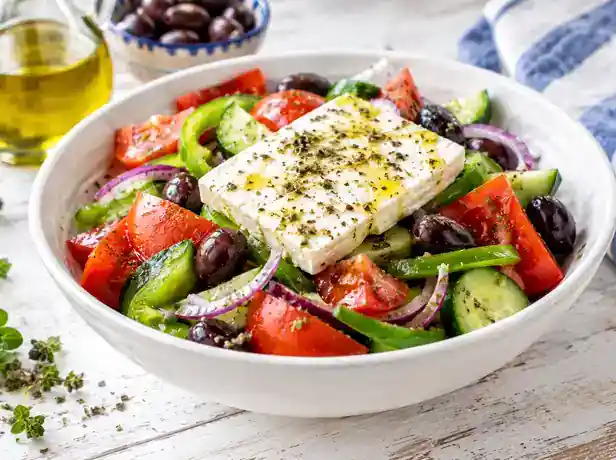
Greek salad is a fresh, colorful side that doubles as a light meal. It has juicy tomatoes, crisp cucumbers, salty olives, and creamy feta. However, many cooks end up with watery, bland, or limp salads instead.
The good news is that the fix is simple. In this guide, you will learn an easy recipe and a few pro tips that work every time. You only need basic ingredients, one bowl, and about 15 minutes. So grab a knife, and let’s begin.
Why This Greek Salad Recipe Works
Great salads come down to three things: ripe vegetables, good olive oil, and the right timing. This recipe uses all three, so the results stay reliable.
First, ripe tomatoes bring natural sweetness and juice. Then a simple oregano dressing adds a tangy, herby kick. Finally, a block of feta on top adds creamy, salty depth.
Because the dressing mixes in one small bowl, cleanup stays easy. The salad also holds up well for a short time. That makes it perfect for picnics.
Ingredients for Greek Salad
You need only a few simple ingredients for this recipe. Prep time is 15 minutes, and there is no cooking. The recipe serves four people.
- 4 ripe tomatoes, cut into wedges
- 1 large cucumber, sliced
- 1/2 cup (75 g) Kalamata olives
- 1 green bell pepper, sliced
- 6 ounces (170 g) feta cheese
- 1 small red onion, thinly sliced
- 1/3 cup (80 ml) extra virgin olive oil
- 2 tablespoons red wine vinegar
- 1 teaspoon dried oregano
- 1/2 teaspoon salt
Choose ripe tomatoes, because they decide the flavor. In winter, cherry tomatoes taste sweeter, so use them instead.
How to Make Greek Salad Step by Step
Follow these steps for crisp, flavorful results every time.
- Cut the tomatoes into thick wedges, and slice the cucumber into half-moons.
- Slice the onion very thin. Soak it in cold water for five minutes, so it tastes milder.
- Whisk the olive oil, vinegar, oregano, and salt in a small bowl.
- Combine the tomatoes, cucumber, pepper, and onion in a large bowl.
- Pour the dressing over the vegetables, and toss gently.
- Top with the olives, then place the feta block or large crumbles on top.
- Finish with a pinch of oregano. Serve right away, because the vegetables release water over time.
Seven Pro Tips for a Fresher Salad
A great recipe is only half the story. These tips make the difference between a limp bowl and truly great Greek salad.
- Pick ripe tomatoes, because they give the sweetest flavor and juice.
- Soak the onion, since cold water removes its sharp bite.
- Use real feta, because creamy brined feta tastes better than dry crumbles.
- Choose good olive oil, since it is the main flavor in the dressing.
- Salt lightly, because feta and olives already taste salty.
- Dress it late, so the vegetables stay crisp.
- Chill the vegetables, so the salad tastes cool and crisp.
Easy Greek Salad Variations
Once you master the base recipe, try these simple twists.
- Chickpea boost: add a can of rinsed chickpeas, because protein makes it a full meal.
- Grilled chicken: top with sliced chicken, then drizzle with extra dressing.
- Pasta version: toss in cooked orzo, since it soaks up the dressing well.
- Avocado twist: add diced avocado at the end, then serve right away.
How to Store Leftovers
Greek salad tastes best fresh, but you can store leftovers in an airtight container. They keep well in the fridge for up to two days. For food safety, put cut vegetables in the fridge within two hours.
To keep the salad crisp, store the dressing and feta separately. Then drain extra water from the bowl before serving. Instead of tossing everything again, add fresh dressing right before you eat.
You should not freeze this salad, because fresh vegetables turn mushy. Prep the chopped vegetables a day ahead instead, and dress them later.
Frequently Asked Questions
Why Is My Salad Watery?
Most of the time, juicy tomatoes and early salting are the main causes. Salt pulls water out of the vegetables. So dress the salad right before serving, and scoop out the tomato seeds.
Can I Make Greek Salad Ahead of Time?
Yes, you can. Chop the vegetables a day ahead, then keep them in the fridge. Add the dressing, olives, and feta just before serving.
What Cheese Works Best?
Feta works best, because its salty, tangy flavor fits the dish. Sheep’s milk feta tastes creamier than cow’s milk feta. On the other hand, goat cheese also works if you cannot find feta.
Final Thoughts on Greek Salad
Greek salad does not need fancy tools or rare ingredients. All it needs is ripe vegetables, good olive oil, and a little patience. Follow the steps above, and you will enjoy a fresh, flavorful bowl every time.
Try this recipe at your next summer barbecue. Then leave a comment and share your favorite add-in.
 Cookie settings
Cookie Policy